Building a bigger traffic jam – My thoughts on the State Highway 1 changes
If we're serious about solving traffic, this ain't the way to do it.

For most things, I’m very much a “yes in my backyard” sort of person. There are plans to upgrade the Golden Mile? I’ll go to Council to show my support – it will be worth it. Building a new apartment block nearby? I want new neighbours, please.
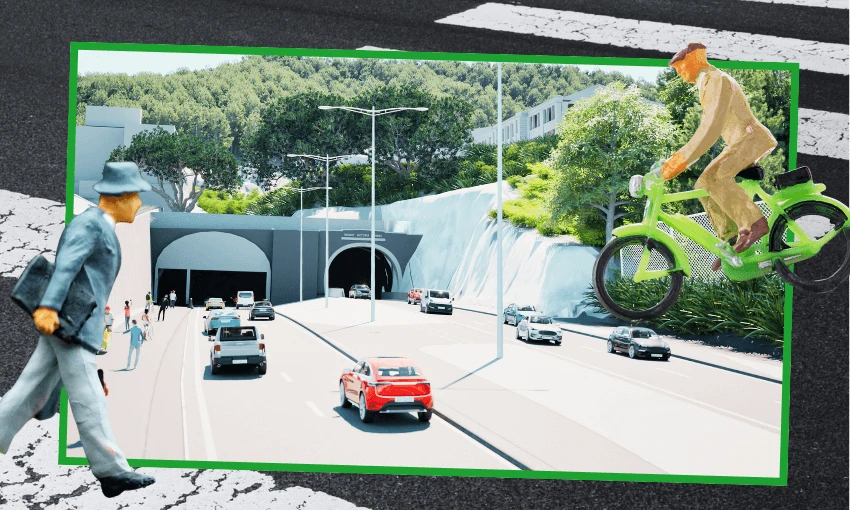
Sometimes, the real world throws curveballs. NZTA has announced details about their plans to increase car traffic through the centre of Wellington with a second Mt Victoria tunnel and second Terrace Tunnel. It will cost nearly four billion dollars and is considered “low” value for money by NZTA's own standards.
The changes are riddled with absurd justifications. To help families get to Saturday sport, NZTA wants to bulldoze parts of Kilbirnie's sports park. To improve public transport, NZTA has cut bus lane funding to build two tunnels for car traffic.
Best of all, in the decade politicians need to halve the country's pollution, NZTA won't tell me how much more carbon this highway will create until after public feedback closes. Transport creates half of the city’s pollution, but NZTA don't mention "carbon" or "emissions" in any of their public information.
This project will shape how Wellington works for decades to come. It demands proper debate. Welcome to my attempt to process my feelings about this very big and very expensive highway.
There are other ways to spend four billion dollars
The goal of connecting the Eastern suburbs and freeing up our streets is a challenge worth solving. With four billion dollars, we could build a lot of infrastructure to help more people move around town without costing the earth.
The disappointing thing is the Government has chosen the least effective and most destructive method for trying to improve transport. Let's see what else four billion dollars could buy us.
For one billion dollars – a quarter of the SH1 project's budget – we could fix every old piece of track on Wellington’s rail network which slow our trains to a crawl each day. More trains could run, cutting traffic on Ngauranga Gorge immediately. We’d still have three billion dollars left over.
Another billion dollars could fund the whole Golden Mile upgrade, and fund $200m town centre upgrades in Kilbirnie, Newtown, Karori, and Miramar too. These street improvements could speed up buses and encourage more people to live nearby.
Another billion dollars would turbocharge our safe biking network. Imagine never needing to nervously pass cyclists on the road again. Everyone would have space to move. A network that comprehensive would make biking just as convenient as driving, meaning fewer cars in traffic and more bikes out of the car lanes.
We could spend the last billion dollars on adding bus lanes wherever possible to deliver faster, more frequent bus services. Buses would be delayed far less frequently, and travelling by bus would be far faster.
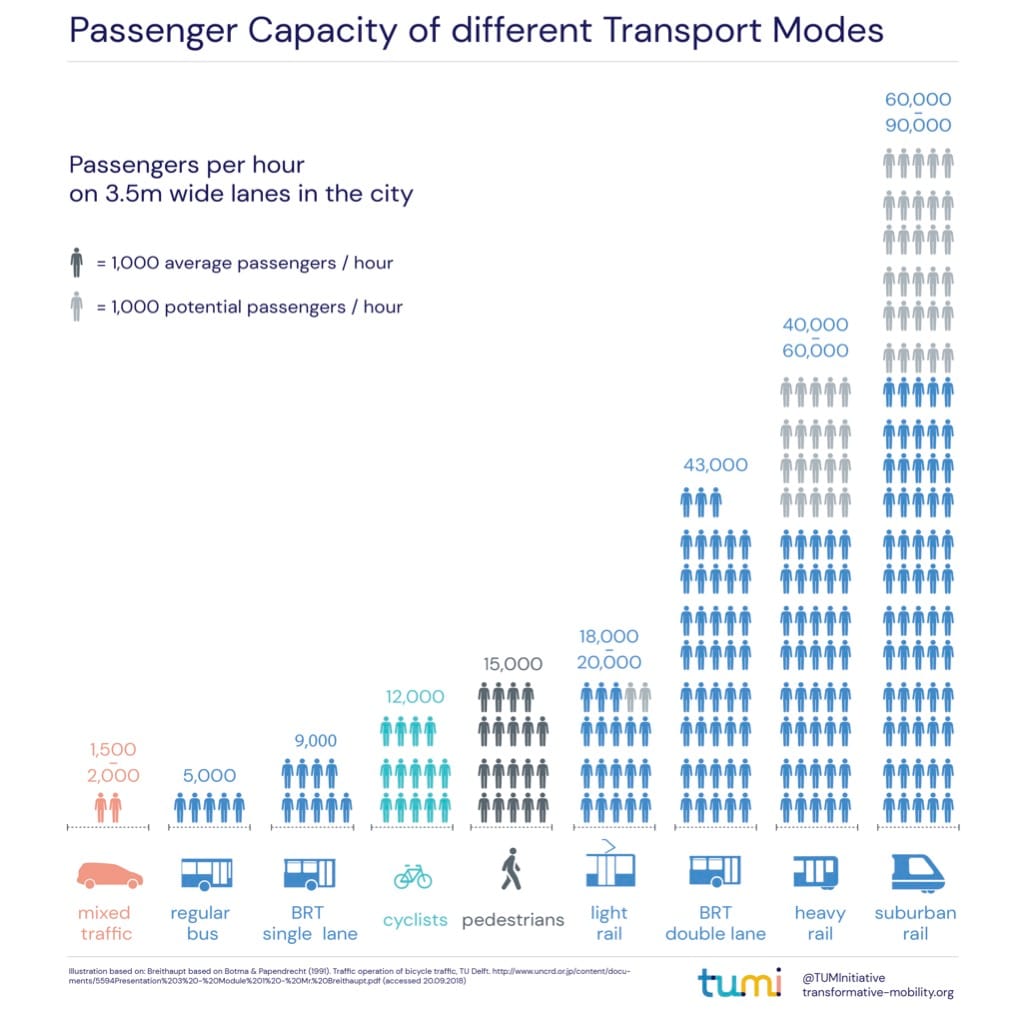
Making these changes will move more people than highways ever could. Faster trains, bus lines, bike lanes, and footpaths all carry more people per hour than an extra lane of car traffic. Improving trains, buses, walking and biking moves more people and cuts car traffic, meaning driving gets nicer too.
Combined, these transformative projects would slash the city's pollution, offer faster and affordable journeys for everyone, while costing the same as two extra tunnels to save, at most, 5-10 minutes from Ngauranga to the airport.
Our councils, democratically elected by our city, consider better buses and faster trains the best way to solve congestion. Yet, the organisation with all the money (NZTA) is instead trying to solve the problem of traffic by encouraging more traffic.
Highway expansions make traffic worse over time
We’ve expanded highways in Wellington before. The Arras tunnel, the Karo Drive bypass, the Wellington Urban Motorway. We’ve built multiple lanes along the Harbour Quays and along Cobham Drive and fed them all with Transmission Gully. Congestion is still bad. Why?
It is because our region is growing, and that growth has to go somewhere. The transport we build shapes where new people choose to live – and whether traffic gets worse or better.
Rail encourages townhouses and apartments by train stops. Bike lanes encourage tight knit neighbourhoods with safe, shared street space.
Highways encourage sprawl. Our growing highway network is encouraging people to live in places as far as Waikanae and commute into Wellington by car. That’s why the region's population has been growing, but Wellington City's population has been flat to declining for a decade.
The SH1 changes will have the same effect. It will encourage people to live out of Wellington, and eventually the speedy commute to the East will become clogged with cars again. The bottleneck will not be solved, it will simply be moved.
This is the reason why internationally, adding more highway capacity doesn't solve congestion. More lanes attract more drivers. Within a few years the new capacity fills up, you're back where you started, and you've spent billions with nothing to show for it.
Every new highway claims it will beat the laws of induced demand. They do not succeed. If we're serious about solving traffic, this ain't the way to do it.
Who chooses what Wellington should be?
Wellington is a magic city. Weird and wonderful people live here. Nature envelops our city like a korowai. A glistening harbour is the cherry on top. My dream is for tens of thousands more people to enjoy living here alongside us.
Encouraging more people to live in our compact city requires building things that encourage it. Trams and busways. Attractive city streets. Apartment blocks by lush parks. Clean, quiet areas where children are safe to play.
The choice to sacrifice more precious city space to a highway which adds more exhaust and tyre fumes through Cuba Street is the opposite of what will help Wellington grow and thrive in the future.
This plan has all the qualities of 20th Century city planning, which treated central cities like giant office blocks rather than communities where people live. Back then, it was okay to bulldoze neighbourhoods to make way for highways. This culture treated streets as inconveniences, rather than destinations in themselves.
Our cousins in Melbourne are recovering from that era by investing in iconic laneways and public transport. Our politicians should steal ideas like these, found in cities across the world, rather than reheat the tired ideas of transport from the early 20th Century.
If this plan goes ahead, which is likely, it will encourage more pollution in a world trying to cut carbon and limit global warming.
It does not have to be this way. Four billion dollars of transport upgrades could be transformative for Wellington, if it is spent on the right stuff.
This is the last week for all of us to tell NZTA what we think about this project. I'll be telling them to spend that huge pot of money on things that will improve traffic for everyone, including drivers. Trains, not lanes. Busways, not highways.
If you want a Wellington built for the 21st Century, join me in doing the same.
Start your submission
Further reading
If you're interested enough in this to want further reading, I have three pieces I think are worth your time.
 Matt L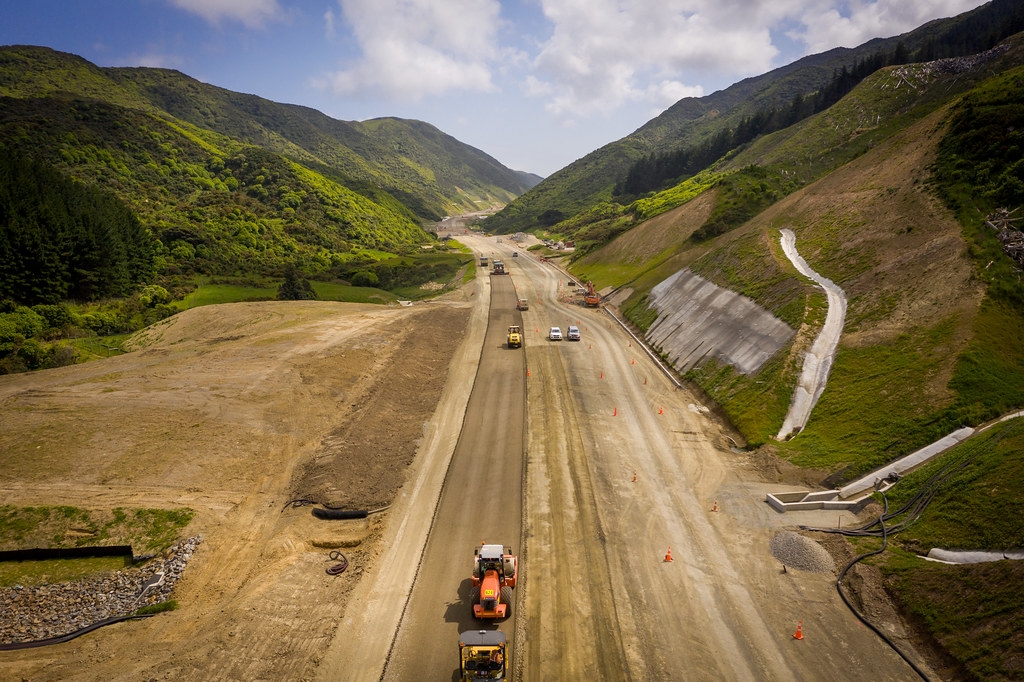
 Harry Winton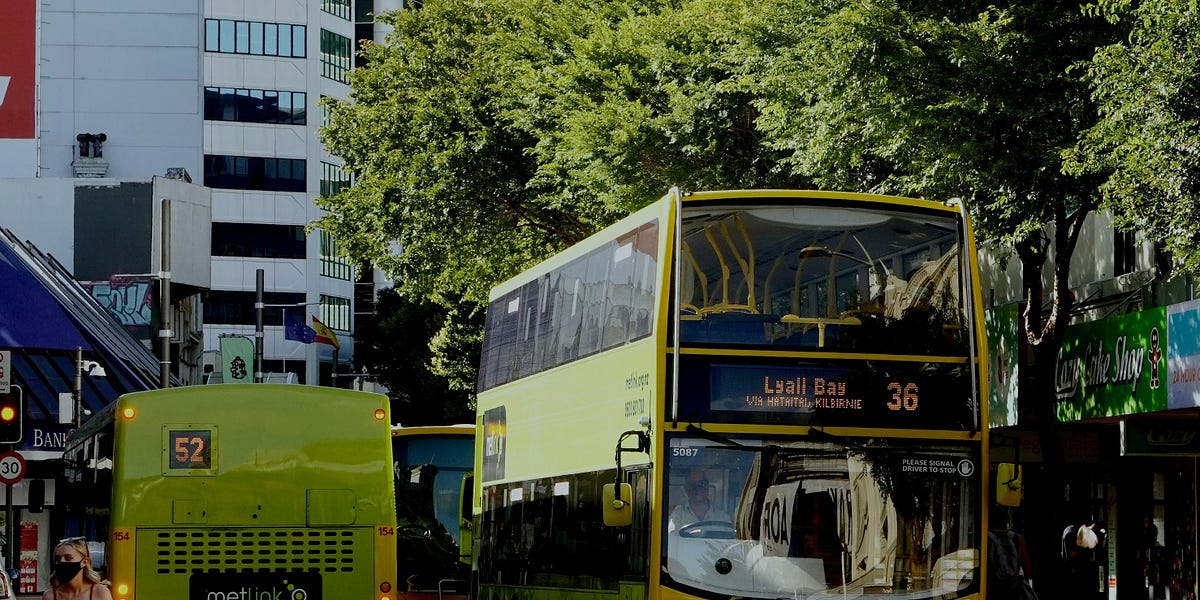
 Joel MacManus