Taking the train from Wellington to Auckland

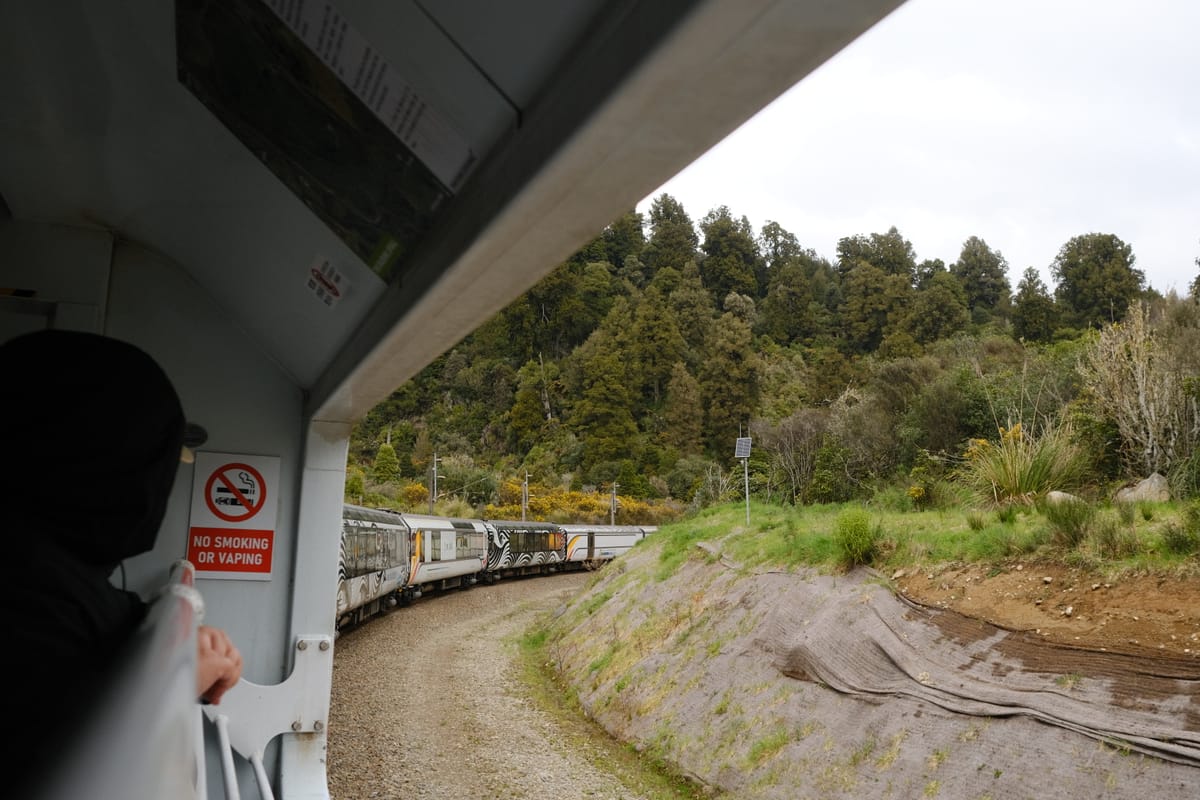
Rail travel has this old-timey feeling in many parts of New Zealand. Our iconic towns like Shannon and Ohakune owe their existence to their rail connections, yet travelling on tracks rather than tyres or wings feels nostalgic rather than realistic.
Despite that feeling, millions of journeys are taken on our trains in Wellington and Auckland every year. Our rail was used to travel the regions as late as the 1990s and Auckland and Wellington were connected daily by train as recently as 2006.
We are no longer in an era of frequent, inter-regional train services. If you try hard enough, though, you can still find a way to get to Auckland by train.
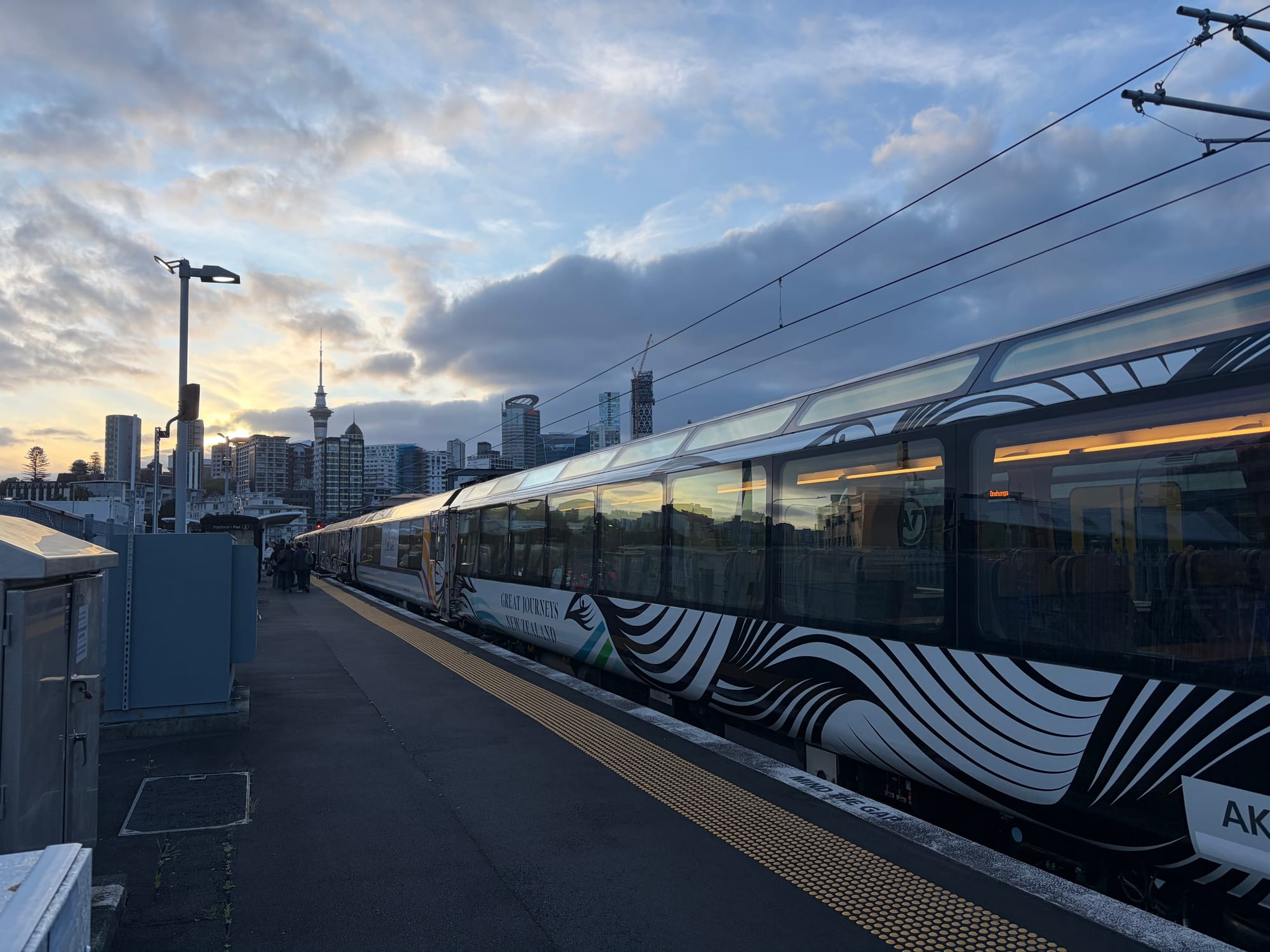
It’s possible on the Northern Explorer, a long distance train that KiwiRail runs between the capital and Auckland. It's a must-do for climate advocates and tourists with good taste. It criss-crosses the country in style, through the austere Central Plateau and the lush King Country.
My partner Hanni, her Granma, and I finally took this trip to make some memories together. Granma is 91 years old and has dreamed of taking this trip longer than me.
As more Kiwi live in cities, building their life around rail rather than roads, it makes sense to revitalise our train travel across regions. Trains produce about 80% less pollution than domestic flights, but that's not the main reason we'd do it again. We want to travel this way more because it's fun.
Trains are the best way to see New Zealand
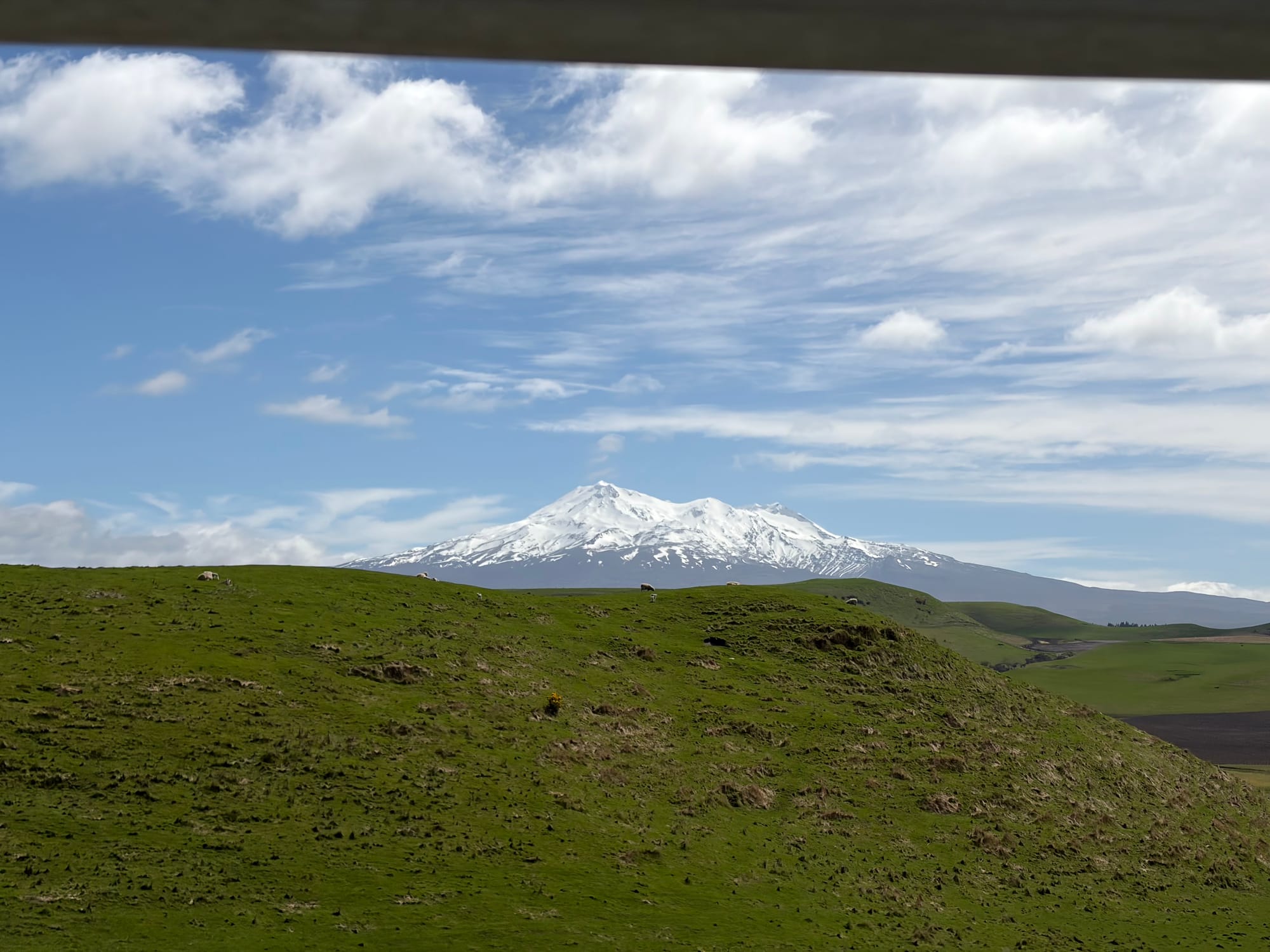
During our 12 hour journey, gorgeous landscapes passed so close you could almost touch them. It’s the best way to see our great country. Road trips pale in comparison.
Our rail cuts through remarkable environments with less disruption than an expressway. Cliff faces and striking rivers are astoundingly close. You see the country in a way most New Zealanders under the age of 30 have literally never seen it. A unique perspective on Tongariro National Park was easily the best part.
The views are just the beginning. Experientially, travelling by train is better in almost every way. Hanni and Granma both get motion sick. Flying or driving are uncomfortable options because they can't see outside easily.
On the train, the ride was smooth – they had absolutely no trouble facing forwards or backwards. We could take bathroom breaks easily. If anyone needed to stretch their legs, they could without pulling over or sliding past flight attendants.
Train travel is also more social. When you fly, the holiday doesn’t really begin until after you’re out of airport hell. On a train, the journey starts the moment we stepped on the platform. Instead of being isolated by noisy jet engines, we could chat for the entire journey. The table we shared was filled with snacks, books, cameras, games. We didn’t need to stress about our water bottles being treated as security threats.
Even though this costs $260 per person each way, there were at least 60 people in our carriage alone. Another 20 to 30 were in the next carriage. There were first class carriages, too. The staff like our train manager Bruce make the journey special. Everyone who took the trip loved the experience – it’s no wonder the journey is praised by the New York Times.
It made me wonder why flights and driving are our default options for tourists to get anywhere outside our cities. I couldn’t imagine the stress of driving in another country. I’d be gutted to miss the views by flying. Offering frequent trains to beautiful towns like Ohakune would be much nicer for the tourists we welcome here. I bet KiwiRail would also make a killing.
There’s huge potential for workers, too
The Northern Explorer is designed for tourists. Yet, I see a huge opportunity for this travel to appeal to online workers.
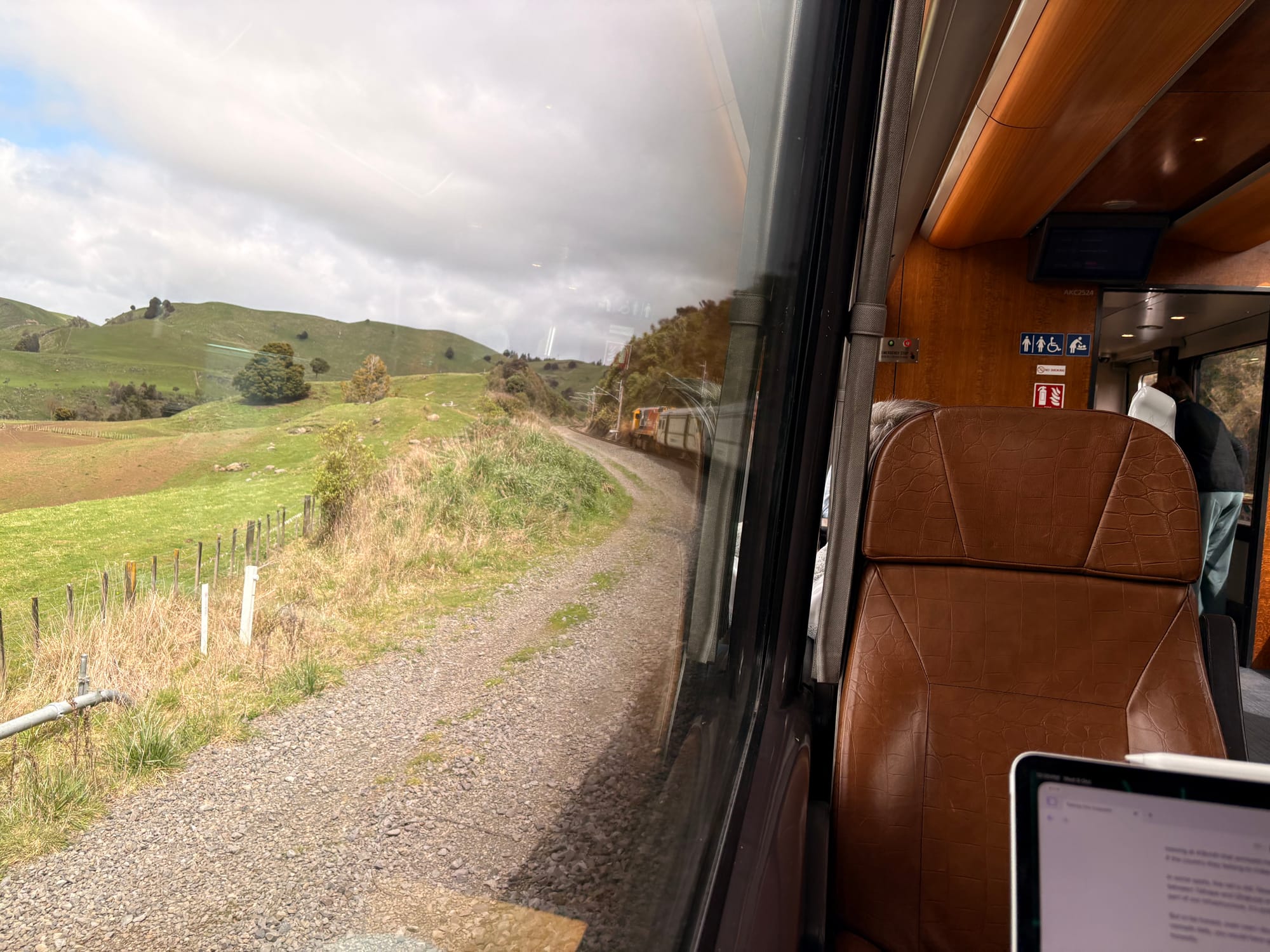
The Northern Explorer has Starlink on board, meaning that it’s easy to get online to do all sorts of remote work or office tasks. This beat patchy 4G coverage, especially along the Central Plateau. I easily could have done a meeting-light workday.
Writing was also far easier with a view. This article almost wrote itself when I could look out to Ruapehu or a stunning wetland while drafting. The quiet clicks and clacks of the carriage were way better in real life than through ASMR YouTube videos.
To cater to more business travellers, Nicolas Reid’s idea to bring back sleeper trains would be game changing for cutting business flights. Business people could leave Wellington after dinner and arrive in Auckland before the workday begins. It would be perfectly timed for an early morning meeting or conference. It even saves paying for a hotel. This would be a true sleeper hit.
Some journeys are too time sensitive and need a flight. That shouldn't stop us from providing rail options where it does make sense for travellers. Tourists, conference goers, locals visiting whānau across the motu, there are so many journeys best served by train travel.
People will love replacing flights or long distance drives with train rides like the Northern Explorer. To make the train attractive to more people, we need some improvements.
Making the trip even better
The journey itself took 12 hours. Before we boarded, that time felt daunting. Yet, a long train trip feels nothing like a long flight. We were genuinely surprised when eight or 10 hours passed. However, competition from flights and driving is fierce, and faster journeys are necessary to stay relevant.
The journey is slow because of infrastructure. Some tracks in our rail network are so old that trains aren't allowed to go faster than 40 km/h on them. I wouldn't be surprised if Tongariro features the same infrastructure my Dad and Granddad installed in the 1980s.
If we could manage an average speed of 100 km/h to Auckland, it would be faster to take the train than drive. Cutting journey times is pretty simple, really. We must modernise the tracks.
The second issue was price. $250 each way is too much to compete with flights. The Northern Explorer is a tourism experience. It receives no subsidisation like Metlink or AT services. If it was treated like public transport, it would be cheaper.
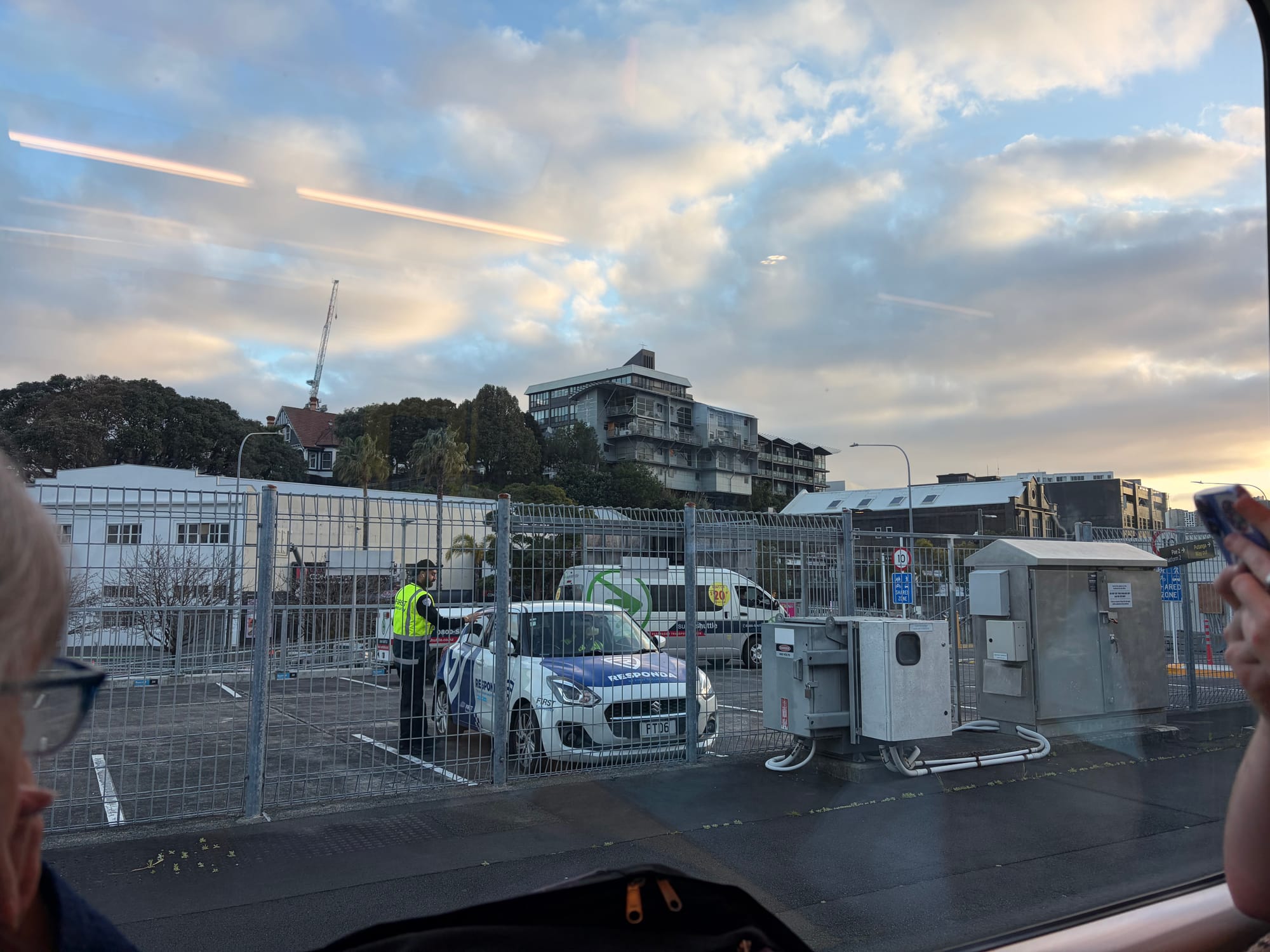
The last improvement is likely the most challenging: where you arrive. Instead of finishing your journey at Waitematā in Auckland's downtown, you’re spat out into a car park generously called Strand station. It's probably called that because you're stranded as soon as you arrive. There are no bus or train connections, unless you climb a massive hill with your bags. Take a taxi, sure, but when Auckland has awesome and affordable public transport, why should you have to?
The Northern Explorer can’t stop at Waitematā because the train runs on diesel, not electricity. I was told by staff on the train that since Auckland's main station doesn't have ventilation for diesel fumes, it's not safe to stop there. The trains run on diesel because our rail network isn't fully electrified. Using old diesel trains is the best (read, cheapest) solution.
These are excuses, but none are good enough: the Northern Explorer must arrive at Waitematā, full stop. The car park dystopia must go. Either make Waitematā safe for diesels, or do the more useful thing and run electric trains with batteries on this journey. These trains are available for purchase right now. While we run those, we can electrify the rest of the line and transform our rail freight.
What’s in the way of this transformation?
The Northern Explorer is a great way to travel – and the fact it's so good shows what's possible if the Beehive gave a shit about improving low pollution travel.
I know that a solution could be found. Countries across the world have thriving rail networks. They have created systems which serve huge populations to get around without costing the earth. Why can’t we?
A huge thing holding back inter-regional train travel is that no one agency is responsible for delivering it.
Public transport is eye-wateringly complicated here. Regional councils are responsible for buses and trains in the boundaries of their rohe. They could collaborate to run services between regions, but don't have any requirement to do so. KiwiRail runs a couple of public transport options, but it’s a freight company at heart. Waka Kotahi… let’s not go there. All of these organisations have some responsibility for new public transport.
We need a new agency whose sole job is delivering regional train services – just like our Transport and Infrastructure Select Committee recommended three years ago.
More people should be able to take the train around the country. It can revitalise the towns along the lines, provide unique views to the 3m+ tourists that visit our country, and cut our road transport pollution. The Greens have already committed to restoring some passenger rail. As more urban New Zealanders live car free, the demand for more services will only grow.
It will take time, willpower, and organised pressure to restore the services New Zealanders used to depend on. But it is possible. After you experience the jaw-dropping views of the Rangiteke river or the rolling hills of King Country, every bit of effort to help more people take the train feels very, very worth it.